
Mid-Term Rental Property Management: A Flexible Alternative to Short-Term Rentals
For property owners looking for an alternative to traditional long-term rentals and short-term vacation rentals, mid-term rentals are becoming an increasingly attractive option.
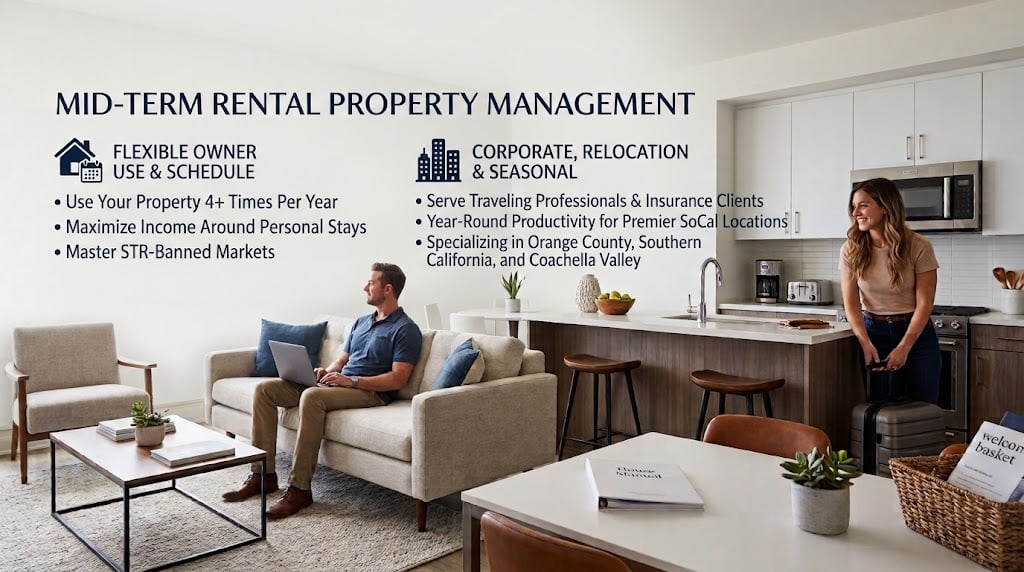
A mid-term rental gives property owners the ability to offer a fully furnished home on a month-to-month or flexible-length basis, making the property available for a wide range of tenants while still allowing the owner to use the property personally throughout the year.
This rental strategy can be especially appealing for owners who have a vacation home, second property, or investment property that they don't want tied up with a traditional 12-month lease.
What Is a Mid-Term Rental?
A mid-term rental generally refers to a furnished property rented for 30 days or longer, although rental terms can vary depending on the property, tenant, and local regulations.
Unlike a traditional unfurnished rental, mid-term properties are typically fully furnished and move-in ready. Tenants can arrive with their personal belongings and immediately have everything they need to live comfortably.
This makes mid-term rentals particularly attractive to people who need temporary housing but don't want to stay in a hotel or commit to a year-long lease.
Some of the most common mid-term rental guests include:
- Business travelers and corporate employees
- People relocating for work
- Insurance relocation tenants
- Seasonal residents
- People between homes
- Traveling professionals
- Families temporarily relocating
- Guests visiting an area for an extended stay
- Vacationers looking for longer stays
Why Mid-Term Rentals Can Be a Great Investment Strategy
One of the biggest advantages of a mid-term rental is flexibility.
Imagine owning a vacation home that you enjoy using several times a year. With a traditional long-term tenant, your property may be occupied for an entire year, making it difficult to use the home yourself.
With a mid-term rental strategy, you can potentially rent the property during the months when you don't need it and reserve the property for your own use during the times you want to visit.
This creates an opportunity to combine:
Investment income + personal use + flexibility
For some property owners, that can be a much better fit than choosing between a traditional long-term rental and a short-term vacation rental.
A Solution When Short-Term Rentals Are Restricted
Another reason mid-term rentals are gaining attention is the changing regulatory environment surrounding short-term rentals.
Many cities and communities have introduced restrictions, permitting requirements, or outright prohibitions on short-term vacation rentals.
That doesn't necessarily mean a property can't be rented.
Instead, property owners may be able to explore longer rental periods and different tenant profiles, depending on local laws, HOA rules, and the specific property.
Mid-term rentals can provide an alternative strategy for owners who want to generate rental income without operating a traditional nightly vacation rental.
It's important to understand that rental regulations vary by city and property, so owners should always verify the applicable local requirements before selecting a rental strategy.
Why Fully Furnished Rentals Are Different
Managing a furnished property is very different from managing a traditional long-term rental.
The property needs to be marketed differently, photographed differently, furnished appropriately, and maintained at a higher level because tenants are renting not just the house or condo, but a complete living experience.
A successful mid-term rental typically needs:
- Quality furniture
- Comfortable beds and linens
- Fully equipped kitchens
- High-speed Wi-Fi
- Smart TVs and entertainment
- Washer and dryer
- Utilities included
- Professional cleaning
- Reliable maintenance
- Flexible check-in and check-out
- Professional photography
- Strategic online marketing
The goal is to make the property feel like a home rather than simply a rental unit.
My Approach to Mid-Term Rental Property Management
I've developed a specialized approach to mid-term rental property management and fully furnished month-to-month rentals.
Rather than treating a furnished property like a traditional rental or simply converting a vacation rental into a monthly rental, I focus on finding the right type of tenant for the property and the right rental strategy for the owner.
The properties I manage can serve multiple types of extended-stay tenants, including seasonal guests, business travelers, corporate housing, insurance relocation clients, and extended vacation stays.
The result can be a property that stays productive throughout the year while still giving the owner the flexibility to use it personally.
Keeping Properties Booked Throughout the Year
One of the biggest advantages of this model is the potential for consistent occupancy.
Instead of relying exclusively on weekend vacation travelers, a mid-term property can appeal to guests who need housing for several weeks or several months at a time.
That can create a different type of rental demand.
For example, an insurance relocation guest may need a furnished home for several months while their house is being repaired. A business traveler may need housing for a temporary assignment. A seasonal resident may want to spend a few months in Southern California without purchasing a home.
These types of tenants can create opportunities for longer, more consistent bookings.
In my experience managing these properties, the right mid-term rental strategy can result in properties being booked throughout the year, even in situations where traditional short-term rentals aren't permitted or aren't the best fit for the property.
Mid-Term Rental vs. Short-Term Rental vs. Long-Term Rental
Every property is different, but here's a simple way to think about the three strategies:
| Rental Strategy | Typical Stay | Furnished | Owner Flexibility |
|---|---|---|---|
| Short-Term Rental | Days to weeks | Usually | High |
| Mid-Term Rental | 30+ days | Usually | High |
| Long-Term Rental | 12+ months | Usually not | Low |
Short-term rentals can produce strong revenue but may involve frequent turnovers, increased guest communication, and local restrictions.
Traditional long-term rentals provide stability but generally give owners much less flexibility to use the property themselves.
Mid-term rentals can sit between the two, providing longer stays while maintaining more flexibility for the owner.
Is a Mid-Term Rental Right for Your Property?
A mid-term rental may be worth considering if you own:
- A vacation home you want to use personally
- A second home
- An investment property
- A furnished condo
- A property in a seasonal destination
- A property where short-term rentals are restricted
- A property near major employers or business centers
- A property that could appeal to insurance relocation tenants
The most important factor is developing the right strategy for the specific property and market.
The Future of Furnished Rental Property Management
The rental market continues to evolve.
Owners today have more options than simply signing a one-year lease or operating a nightly vacation rental.
Mid-term furnished rentals offer another option — one that combines flexibility, convenience, and the potential for strong rental demand.
For owners who want rental income but also want the ability to use their property throughout the year, this can be an especially interesting strategy.
If you own a property in Southern California, Orange County, the Coachella Valley, or another market where furnished mid-term rentals are in demand, I'd be happy to discuss whether this rental model could work for your property.
Interested in Mid-Term Rental Property Management?
If you're considering turning your furnished property into a month-to-month rental, seasonal rental, corporate rental, or insurance relocation property, I can help you evaluate the opportunity.
My focus is on creating a rental strategy that works for both the property and the owner — with the goal of maximizing occupancy while maintaining the flexibility to use the property when you want it.
Contact me to discuss your property and learn whether mid-term rental management could be a better option than a traditional long-term or short-term rental.
Check out this article next